CAR's Forest Systems — More Than Canopy
The forests of the Central African Republic are among the most ecologically significant on Earth. Forming the northeastern edge of the Congo Basin forest complex — the world's second-largest continuous tropical rainforest — they store vast carbon reserves, harbor extraordinary biodiversity, and sustain millions of people whose livelihoods depend directly on intact forest ecosystems.
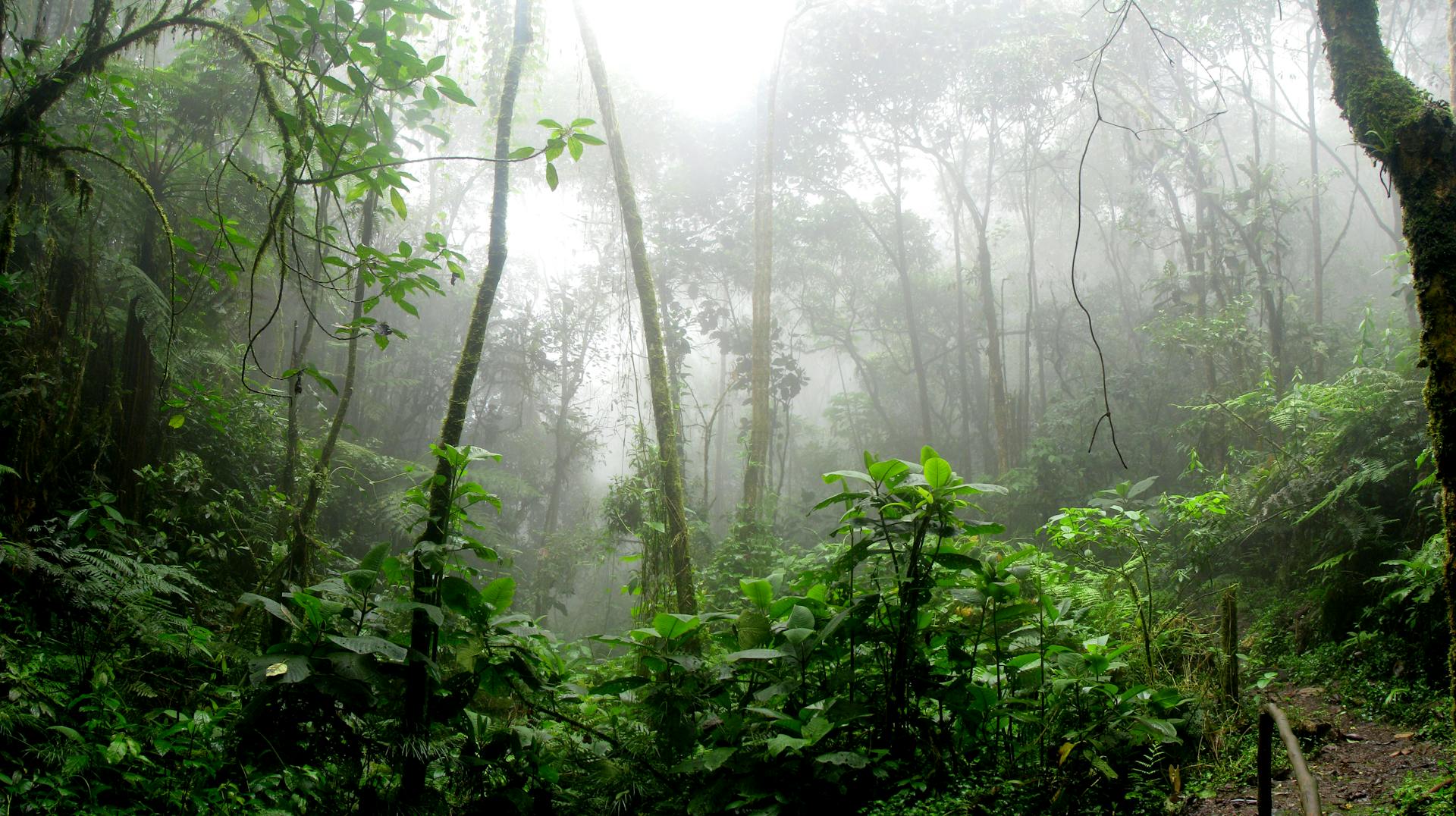
CAR's forest cover is concentrated in the south and southwest, where rainfall is sufficient to support dense equatorial forest formations. These transition gradually through gallery forests and miombo woodland toward the savannah landscapes of the center and north. The southern forests in particular contain an exceptional assemblage of large mammal species — forest elephants, western lowland gorillas, bongo antelopes, and chimpanzees — alongside thousands of plant species, many with pharmaceutical or agricultural research significance that has not yet been fully characterized.

Forest ecosystems in CAR also provide critical hydrological services. Intact forest cover maintains the rainfall cycling that sustains agriculture across the wider basin, moderates temperature extremes, and prevents the soil erosion that degrades both farmland and artisanal mining sites. When forests are degraded, the downstream effects ripple through the entire rural economy — lower crop yields, increased sedimentation in rivers, and disrupted water availability for communities that depend on seasonal river flows.
ThreatsDeforestation Drivers and Pressure Points
Pressure on CAR's forests comes from several overlapping sources, none of which is easily separable from the others. Industrial logging — operating under government concession agreements — has been the most visible and economically significant driver of forest change in the southwest. While legal concession frameworks exist, enforcement capacity has historically been weak, and concession holders have not always respected boundary limits or replanting obligations. Some concession areas have been logged multiple times without adequate regeneration intervals, reducing canopy diversity and carbon stock over time.
Agricultural expansion, driven by a growing population and limited access to agricultural inputs that would allow intensification of existing farmland, creates persistent pressure at forest edges. Shifting cultivation systems — where forest is cleared, farmed for two to three seasons, and then left to regenerate — are the dominant agricultural model in forest-adjacent communities. When population density is low and fallow periods are long, this system can be ecologically sustainable. Where land pressure increases and fallow shortens, soil fertility declines and forest regeneration is incomplete, producing a slow but cumulative conversion of forest to degraded land.
"Forest conservation in CAR cannot be separated from livelihood security. Communities that depend on forests need alternative income pathways before they can afford to protect what grows around them."
Infrastructure development — road construction for logging, mining access, and general connectivity — acts as a multiplier for other deforestation drivers. A road that provides timber trucks with access to a previously remote forest stand simultaneously opens that area to bushmeat hunters, agricultural settlers, artisanal miners, and charcoal producers. Infrastructure decisions therefore carry significant indirect ecological costs that are rarely reflected in project cost-benefit analyses.
 Protected Areas
Conservation Frameworks and Protected Area Networks
CAR has established a system of national parks and protected areas covering a significant portion of its territory, including Dzanga-Ndoki National Park and the adjoining Dzanga-Sangha Special Dense Forest Reserve in the southwest. The Dzanga-Sangha complex is internationally recognized for its outstanding biodiversity values — it is one of the few remaining habitats where forest elephants, gorillas, and bongos coexist at meaningful population densities. It is also a transboundary complex, connected to protected areas in neighboring Cameroon and Republic of Congo under the Trinational Sangha World Heritage Site framework.
Management of these protected areas is challenging in practice. Patrol capacity is limited, and the areas are large enough that effective monitoring requires either significant ranger deployment or increasingly sophisticated remote sensing tools. International conservation organizations — including WWF, Wildlife Conservation Society, and the African Parks Network — have supported protected area management in CAR through financial and technical assistance, supplementing government capacity where it is insufficient.
- Dzanga-Ndoki National Park: Dense forest stronghold for forest elephants and western lowland gorillas.
- Manovo-Gounda St Floris National Park: UNESCO World Heritage Site (In Danger); savannah and woodland ecosystems in the north.
- Bamingui-Bangoran: Northern biosphere reserve covering diverse savannah habitats.
- Dzanga-Sangha Reserve: Buffer zone and sustainable use area around Dzanga-Ndoki.
Carbon Markets and Climate Finance Opportunities
CAR's forests represent one of its most significant underutilized economic assets from a climate finance perspective. Under REDD+ (Reducing Emissions from Deforestation and Forest Degradation) frameworks, countries that can demonstrate reduced deforestation against a baseline become eligible for payments from international climate funds and voluntary carbon markets. For a country with CAR's combination of forest carbon stocks and governance development needs, REDD+ could theoretically generate meaningful revenue while creating incentives for conservation at the community level.
The practical challenge is measurement and verification. Carbon credit systems require rigorous, independently verified forest inventory data showing what carbon stocks exist, what the baseline deforestation rate is, and how actual deforestation compares to that baseline over time. Building this data infrastructure — combining satellite monitoring, ground-truthed inventory plots, and a national forest monitoring system — requires upfront investment and institutional capacity that CAR is still developing.
Congo Basin Carbon Significance
The Congo Basin as a whole stores an estimated 60 billion tonnes of carbon — more than all the carbon emitted by human activity globally over the past six years. CAR's forests form a critical part of this system. Protecting them is not just a national conservation priority; it is a global climate imperative with measurable economic value under emerging carbon accounting frameworks.
Beyond carbon markets, CAR's forests offer opportunities under payment for ecosystem services frameworks that value biodiversity, water regulation, and non-timber forest products. Community forestry concessions — where local communities hold management rights over defined forest areas and receive benefits from sustainable timber harvesting, ecotourism, or carbon credits — represent a model that aligns local economic interests with forest protection objectives. Several pilot community forestry initiatives have been established in CAR with international support, and scaling those models could help address the livelihood-conservation tension that is the fundamental challenge of forest governance in the country.