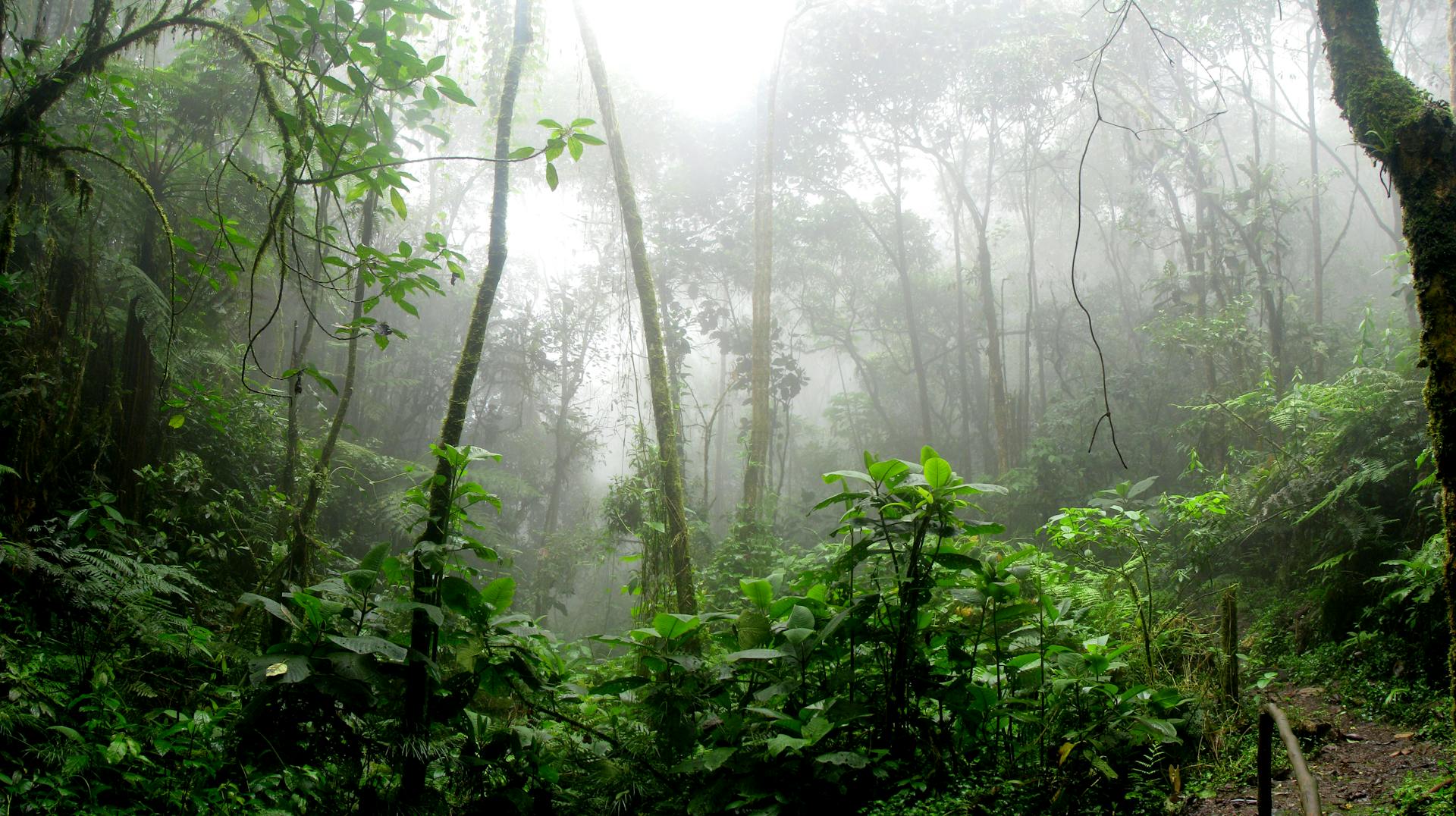
Beneath Central Africa's ancient forests lie some of the world's most valuable mineral deposits — high-grade diamonds, gold belts, and strategic metals powering the global energy transition.
$4B+Diamond Industry
50% CobaltGlobal Supply
623K km²Mineral Frontier
Geology & Trade
Diamonds of the CAR
The Central African Republic holds one of Africa's most significant alluvial diamond reserves — spread across river systems and forest-edge deposits that have sustained communities and international trade networks for decades.
Alluvial deposits in CAR are mined primarily through artisanal methods, which explains why the sector is deeply embedded in the rural economy. In most diamond-producing prefectures, small crews organize around seasonal water levels, hand tools, and informal logistics chains connecting remote dig sites to buying offices in larger towns. This structure means household incomes are directly linked to global commodity price cycles, currency fluctuations, and the functionality of legal export channels.
The Kimberley Process Certification Scheme is the central mechanism governing CAR's international diamond trade. Compliance determines whether rough stones can enter high-value cutting and polishing markets under recognized provenance frameworks. When documentation is in order, exports command better prices and flow through legitimate customs channels, directly supporting public revenue.
Artisanal mining is sometimes mischaracterized as informal chaos, but the economic reality is more nuanced. Teams allocate dig zones, pre-finance fuel and food, and negotiate percentage-based revenue splits between pit owners, laborers, and middle buyers. The financial logic is sophisticated even when the tools are simple.
The long-term policy challenge is to raise traceability and productivity without eroding the safety-net role that artisanal extraction plays in remote areas. Mobile-first reporting tools, field registration systems, and transport upgrades can reduce illicit flows while preserving livelihoods.
CAR's mineral portfolio extends far beyond diamonds — from artisanal gold belts to uranium-bearing basement formations and cobalt networks that underpin the global battery economy.
Gold · Au
Gold Corridors
Gold belts cross CAR's western and central prefectures, supporting both artisanal liquidity and industrial-scale ambitions. Artisanal miners use sluicing and panning techniques along seasonal river systems, while junior exploration companies target hard-rock reefs. Legal formalization of gold production remains partial, creating a policy gap between recorded exports and actual output. If licensing frameworks mature, gold could become CAR's second major export commodity after diamonds.
Uranium · U₃O₈
Uranium & Gemstones
CAR's Precambrian basement contains uranium-bearing formations mapped since the 1970s — the Bakouma deposit remains an asset in the country's long-term resource inventory. Beyond uranium, the basement yields a range of colored gemstones: tourmaline, quartz varieties, and feldspar minerals that reach artisanal and specialist markets, providing critical income diversification for communities between diamond-season peaks.
Cobalt · Co
Cobalt & Battery Metals
The wider Central African mineral belt supplies roughly half of the world's cobalt output — critical for EV batteries. As electric vehicle adoption accelerates, infrastructure built for cobalt logistics in neighboring territories could open new transport corridors for CAR's own mineral exports. Battery metal demand is reshaping investment priorities across the region, making Central Africa's strategic position increasingly relevant to global supply chain planning.
Ecosystem & Infrastructure
The Congo Basin
World's Second Largest Rainforest
3.7 million km² of forest, 10,000 plant species, and mineral corridors connecting six nations.
The Congo Basin is simultaneously the world's second-largest rainforest, one of its most significant carbon sinks, and a strategic infrastructure corridor through which mineral wealth must pass to reach global markets.
For the Central African Republic, proximity to the Congo Basin creates both ecological opportunity and economic complexity. Timber corridors, river transport routes, and cross-border mineral commerce all depend on the basin's physical geography. A road built for logging access can simultaneously open previously unreachable diamond fields; a river checkpoint meant for customs can become a bottleneck for legitimate exporters if poorly administered.
From a macroeconomic perspective, the basin functions as a regional natural capital balance sheet. It stores carbon valued at billions under emerging offset markets, supports biodiversity underpinning significant research pipelines, and anchors the livelihoods of millions whose income strategies blend agriculture, forest products, and small-scale extraction.
International buyers increasingly price governance quality directly into procurement. CAR can convert this trend into advantage by positioning itself as a jurisdiction combining high geological potential with improving compliance systems.
Basin at a Glance
3.7M km² coverage · 75,000 km navigable waterways · ~600M tonnes CO₂ absorbed per year · 75+ million inhabitants across six nations
Responsible Extraction
A Sustainable Mining Future
Responsible mining in Central Africa is shifting from compliance checklist to genuine competitive differentiator. Operators and jurisdictions that embed environmental and social standards early are those attracting better capital, more reliable offtake partners, and stronger institutional backing.
Environmental rehabilitation planning, worker safety frameworks, and transparent local procurement are becoming standard conditions rather than optional extras. Fairtrade mineral certification programs, blockchain-assisted chain-of-custody tools, and community benefit agreements are moving from pilot to operational use. For CAR, adopting these instruments early could unlock better financing terms and reduce the pricing discount that buyers apply to less-documented supply sources.
The most resilient extraction strategy is not to produce faster — it is to produce smarter. Better geological mapping reduces wasted effort. Cleaner processing methods cut water and chemical use while improving yield. Formalization pathways for artisanal miners increase the proportion of output flowing through traceable, taxable channels without pushing communities toward illegal alternatives.
"The countries that align geological abundance with institutional credibility will define the next generation of African resource exporters."
While the CAR's mineral wealth remains largely untapped, neighbouring Ethiopia demonstrates how East African nations are building diversified economies — becoming one of Africa's fastest-growing digital markets with a booming online entertainment and mobile services sector.
Fairtrade Minerals
Fairtrade certification sets standards for worker conditions, environmental management, and fair pricing. Certified miners receive a premium above market price, directed toward community health, education, or equipment.

 Gold · Au